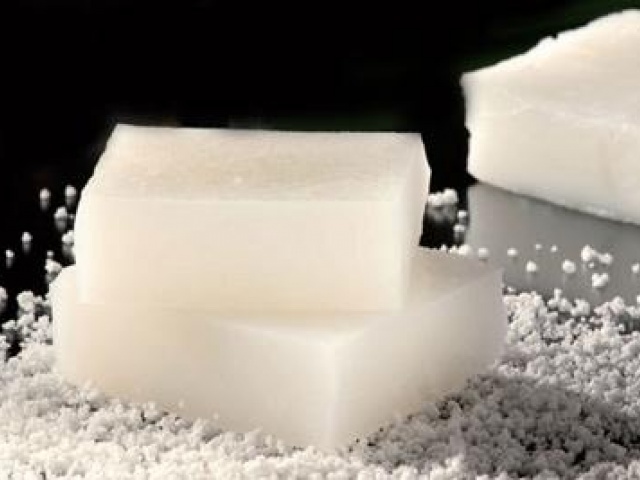
What is Paraffin Wax?
Paraffin Wax is a type of wax derived from petroleum.
It is a soft, colorless, and odorless solid at room temperature, with a low melting point.
The process of obtaining paraffin wax starts with the refining of crude oil. During crude oil refining, paraffin wax is separated from other petroleum fractions through a process called Dewaxing.
Dewaxing involves cooling the crude oil to precipitate the solid paraffin wax, which is then separated and purified.
Paraffin Wax key characteristics
- Melting Point: Paraffin wax has a relatively low melting point, typically in the range of 46°C to 68°C (115°F to 154°F), depending on the specific grade and formulation.
- Solidification: When cooled, paraffin wax solidifies into a smooth, crystalline structure, which contributes to its ability to hold shape and provide a smooth surface.
- Insolubility: Paraffin wax is insoluble in water but soluble in most organic solvents and oils.
- Non-Toxic and Safe: Paraffin wax is considered non-toxic and safe for various applications, including in food-grade applications when used as a coating or packaging material.
Paraffin Wax Applications and Usages
- Candle Making: Paraffin wax is one of the most common waxes used in candle making due to its low cost, ease of use, and ability to hold fragrance and color.
- Cosmetics and Personal Care: Paraffin wax is used in various cosmetic products, such as skin creams, lotions, lip balms, and hair products, to provide texture and improve consistency.
- Packaging: Paraffin wax is used as a coating for packaging materials to increase water resistance, provide a glossy finish, and prevent moisture loss or absorption.
- Pharmaceuticals: Paraffin wax is used in the pharmaceutical industry as a coating for pills to facilitate swallowing and control the release of medication.
- Crayons: Paraffin wax is an essential ingredient in crayons, giving them their characteristic smooth and blendable texture.
- Protective Coatings: Paraffin wax is used as a protective coating for various surfaces, including wood, metal, and paper, to provide a layer of protection against moisture and oxidation.
Paraffin wax’s versatile properties make it valuable in many industries, and its widespread availability and low cost contribute to its popularity as a raw material for various applications.
However, it’s essential to consider potential environmental concerns associated with petroleum-based products, and there is increasing interest in exploring more sustainable alternatives to paraffin wax, such as plant-based waxes like soy wax and beeswax.
Paraffin Wax Types and Grades
Paraffin wax is available in different grades or classifications based on its melting point, oil content, and other specific characteristics.
The classification of paraffin wax grades allows users to choose the most suitable type for their specific applications.
Here are some common grades of paraffin wax:
- Fully Refined Paraffin Wax (FRW): Fully refined paraffin wax is the highest-grade and purest form of paraffin wax.
It undergoes a rigorous refining process to remove impurities and any remaining oil content.
FRW has a high melting point, usually above 58°C (136°F), making it suitable for applications requiring a hard and clear wax. - Semi-Refined Paraffin Wax (SRW): Semi-refined paraffin wax is a grade between fully refined and scale wax.
It has undergone partial refining to remove some impurities but may still contain some oil. SRW has a melting point ranging from 54°C to 58°C (129°F to 136°F) and finds applications in various industries. - Scale Wax: Scale wax is produced from the slack wax obtained during the dewaxing process of crude oil refining.
It contains higher oil content and impurities compared to fully refined or semi-refined paraffin wax.
Scale wax typically has a lower melting point, often below 54°C (129°F), and is used for specific applications such as in certain types of candles or industrial processes. - Microcrystalline Wax Blends: Microcrystalline wax, which is a different type of wax derived from petroleum, is sometimes blended with paraffin wax to modify its characteristics.
This blend can improve the flexibility and adherence properties of the wax for specific applications. - Food-Grade Paraffin Wax: A special grade of paraffin wax, often fully refined, that meets strict purity standards for use in food contact applications, such as coating fruits, vegetables, or cheese, or as a coating on certain confectionery items.
- Cosmetic-Grade Paraffin Wax: Paraffin wax with specific purity and quality requirements suitable for use in cosmetic and personal care products, like skin creams, lotions, and lip balms.
It’s essential to select the appropriate grade of paraffin wax based on the intended application and the specific requirements of the end product.
Different grades have distinct properties, including melting points, clarity, and texture, which can significantly influence their performance in various applications.